Every podcast episode has more moving pieces than just the conversation itself. Between the graphics, the intro, the ads (if you run them), and the text that travels alongside the episode, there’s a lot to keep track of before you hit publish. The good news is that, once you know what belongs where, you can build a simple template and reuse it every time.
Think of this as your episode outline or checklist—the pieces you gather and place in order before you sit down to record or upload. Here’s what belongs in every episode, and where it fits.
1. The Square Episode Graphic
This is your episode image or thumbnail, the one that shows up on your podcast player, your social posts, your blog post (if applicable), and anywhere your show is listed. Keep it simple and easy to read even at a small size, since it will often be shrunk down to a true thumbnail size in many views. Create an on-brand Canva template for this graphic, something uniform that can be used with only minor changes (like the episode number or title) with each use.
2. The Wide Episode Graphic
You only need this one if you’re publishing your episode as a video on YouTube. It should be sized for YouTube’s video and thumbnail dimensions, so the same graphic can double as both your video’s opening visual and its thumbnail image. Similarly to above, creating a uniform Canva graphic or template for each video will save you an incredible amount of time per episode, and it will keep all of your videos clearly on-brand and identifiable.
3. The Standard Show Intro
This is the same for every episode—your show’s consistent, branded opener. It might include your podcast name, a short tagline or description, music, and a brief welcome from the host. If you’re recording video, it should also include on-screen visuals so it works well whether someone is watching or just listening.
Keep it short and recognizable. Your standard intro doesn’t need to explain everything about your show; it simply needs to orient your audience and let them know, “You’re in the right place.” Over time, that familiar opening becomes part of your overall podcast brand.
4. The Episode Intro
Unlike the standard intro, this part is specific to the episode. It’s where you set the hook, tell your listener what they’re about to hear, and give them a reason to keep going. You might introduce your guest, name the problem you’re addressing, ask a compelling question, or preview one of the most helpful takeaways from the conversation.
Some podcasters swap the order of the standard and episode intros, or blend the two together so the hook comes first. Either approach works. The important thing is that your listener understands fairly quickly why this particular episode is worth their time.
5. The Content
This is the heart of the episode: your conversation, your teaching, your story, or some combination of the three. Every other piece on this list exists to introduce it, support it, or close it out well.
Whether you’re interviewing a guest or recording a solo episode, it helps to have at least a loose outline before you begin. You don’t need to script every word, but a few key questions, talking points, or transitions can keep the conversation moving and make editing much easier later.
6. Ad Breaks (If You Run Them)
Ads are optional, and if you include them, you generally only need one placement: pre-roll (before the content), mid-roll (in the middle), or post-roll (after). Running ads in all three spots usually isn’t necessary, especially for a shorter show, and too many interruptions can make an episode feel longer than it needs to.
Choose the placement that fits your show, your sponsor, and your audience best, then stay fairly consistent with it. You can also use this space for your own promotions—an upcoming event, a new resource, your email list, or another offer that naturally connects with your listeners.
7. The Episode Outro
Once your content wraps, this is where you close out this specific episode. You might briefly summarize the conversation, point listeners toward the show notes, mention a resource discussed in the episode, or remind them where they can connect with your guest.
Keep this part brief. You’re giving listeners a clear next step, not repeating everything they just heard. If there’s one action you especially want them to take after this episode, this is a good place to make it easy for them.
8. The Standard Outro
Like the standard intro, this closing stays the same from episode to episode. It might include your usual sign-off, a reminder to subscribe or follow the show, your website, or a simple invitation to connect with you elsewhere.
It’s a small piece of the overall episode, but consistency here matters. A familiar closing gives each episode a finished feel and helps your show sound polished no matter which episode someone happens to discover first.
9. The Description
This shorter piece of text travels with your episode wherever it’s listed, so think of it as the quick introduction to the content. In just a few sentences, tell potential listeners what the episode is about, who it’s for, and why they might want to press play.
For video platforms especially, keep the opening lines concise and compelling, since only part of the description may appear before someone has to click to see more. You can always save the fuller story, links, resources, and additional context for your show notes.
10. The Show Notes
This is the longer text that accompanies your episode. It’s where you can expand on the topic, introduce your guest in more detail, link anything you mentioned, share resources or references, and give your audience an easy way to find what they heard about during the conversation.
Your show notes can also support your website and search visibility, especially if each episode has its own page. They don’t need to become a full blog post unless that makes sense for your strategy, but they should give readers enough context to understand the episode and enough information to take the next step.
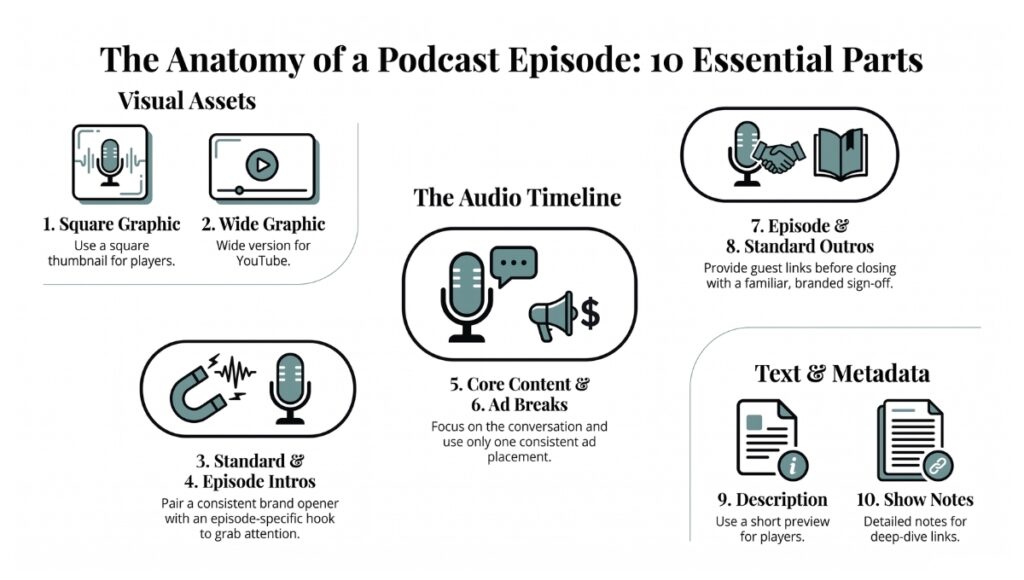
Once you’ve gathered these ten pieces, putting an episode together stops feeling like a mystery and starts feeling much more like filling in a template. Build your standard intro and outro once, create reusable graphics, save this downloadable list somewhere handy, and you’ll have a repeatable process to lean on for every episode from here on out.
Download the Podcast Episode Checklist Here!
This post may contain affiliate links. Read our full affiliate disclosure here.